

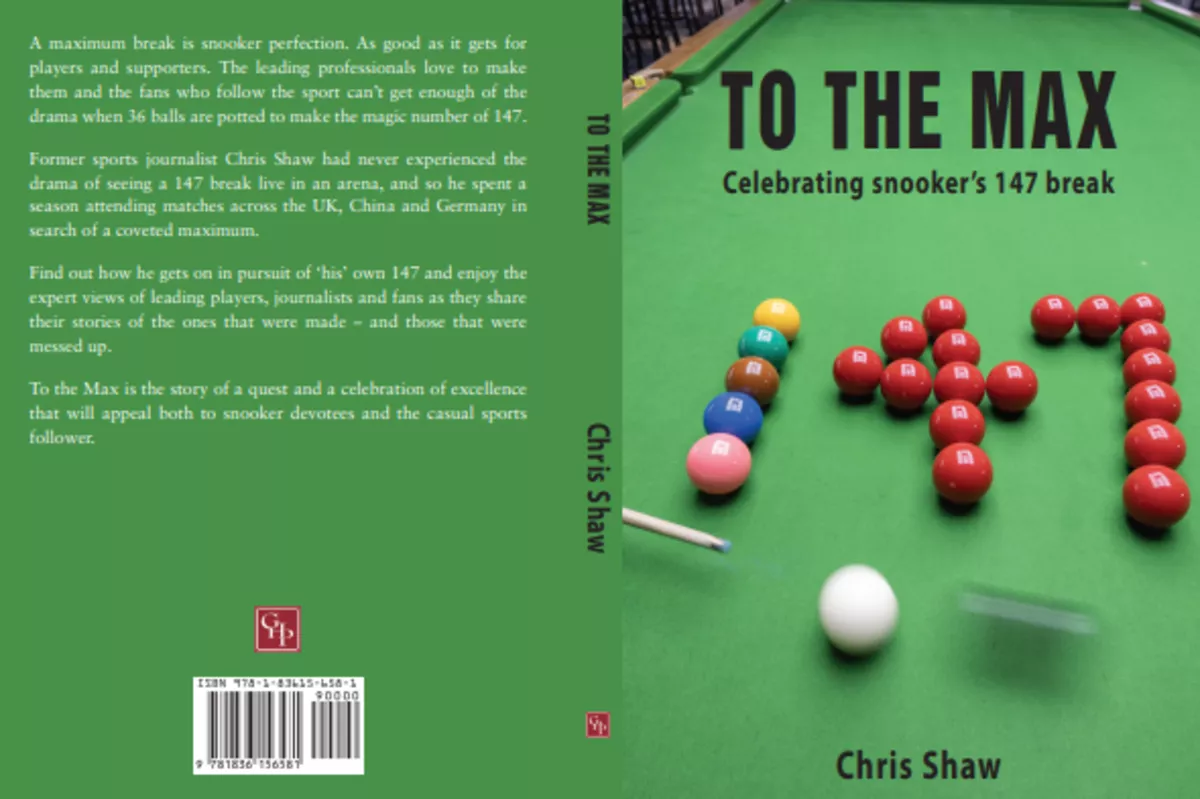
Guest columnist Chris Shaw has published a book on his quest to see a 147 break in snooker. Here he explains why he cannot get enough of the maximum break.
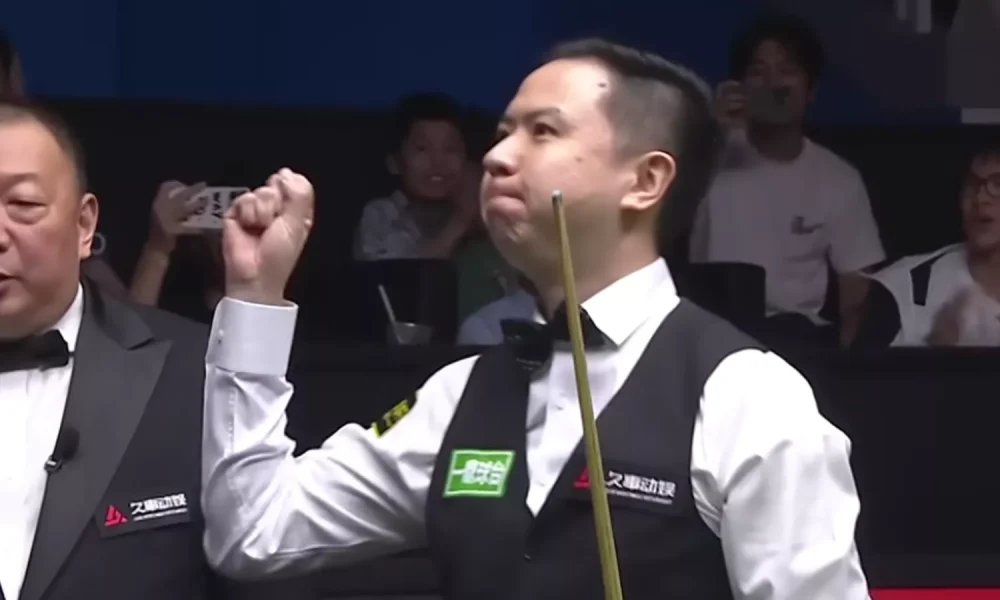
“Not Another One,” the World Snooker Tour’s headline pronounced this week after Xiao Guodong made a 147 against Neil Robertson in the Shanghai Masters.
The phrase was popularised by a voter, Brenda from Bristol in 2017, when she was asked by the BBC to give her reaction to the news that the UK would be holding a General Election.
So should we be excited by Xiao making the fifth maximum of the season and the 246th official 147 break in the game’s history before the end of July?
Are we suffering from maximum fatigue or will snooker fans always cherish a 147, no matter how often they come around?
As an author of new book “To the Max – Celebrating snooker’s 147 break”, it won’t come as a surprise that I am firmly in the latter camp.
The perfect break still brings pleasure – provided you can keep up with them all – and last campaign’s record haul of 24 maximums already seems under threat.
For a season, I travelled to 18 tournaments in the hope of seeing a maximum break made live in an arena.
I won’t spoil my story by revealing whether my plan came together, but had I been setting off on this venture in 2026, I would have been very confident of catching a maximum.
Instead of being fed up with 147s, they still give me that sporting feel-good factor, especially when there is an enthusiastic crowd to cheer the efforts of the expert break builder.
Like many good dramas, a maximum break can be appreciated in five acts – always with a joyous conclusion.
Act One is ‘the in’ and this is often a highlight, a thrilling opening salvo. An ‘in’ can be a long, tricky red which draws applause. It can be an example of daring and risk.
In the case of recent maximums by Chang Bingyu (2026 Shenzhen Open qualifiers) or Zak Surety (2025 International Championship), the first red could involve a shot with the rest.
If the black is then left on its spot and if it pots to both pockets, all the better.
Act Two is the “sign of promise”. This is the stage in the break when the television commentators offer a remark like “five reds, five blacks”.
Often they say nothing more, but it is a cue to the viewer and the production crew to keep an eye on this as the player could be about to do something special.
Then we have the halfway stage or Act Three’s “setback” for our 147-seeker.
This often involves a player making a tricky pot and/or splitting a pack of reds only to leave one or more balls in awkward positions, storing up problems for later.
We wonder: how are they going to deal with that?
In Act Four of dramas, the hero reaches the “worst point” when all hopes of glory appear to have been snatched away.
If we go back to the first official televised 147 in 1982, Steve Davis looked to have blown his chances of a maximum when he was left with no angle on the pink.
He then played one of the most celebrated recovery shots with the rest to leave himself one pot away from history.
Jeopardy and doubt help make the best 147 breaks.
After battling through 35 successful pots, all the while maintaining rhythm and confidence, Act Five is ultimately “the clincher”.
This is the defining moment when the final black is dispatched before the celebrations and congratulations can begin.
For the serial maximum maker, the home straight is familiar. Yet what impresses me most is how those making maiden 147 breaks deal with the pressure.
Michael Holt and Liam Highfield both opened their 147 accounts this season, and they appeared calm and controlled as they did so.
So frequently have 147s been compiled in the last few months that I have often felt the need to binge watch them on YouTube, just to keep up to date.
I like to recognise examples from the five acts mentioned above, but more often I just admire the skill, the cue ball control, and the players’ ability to problem-solve and work out the table.
It is possible to have too much of a good thing, and you might be a little ho-hum about the perfect break these days.
But if you are in an arena when a maximum break is made, I’ll bet you will be on your feet joining in the applause and telling the tale to other snooker lovers for many years to come.
“To the Max – Celebrating snooker’s 147 break” is available now in Kindle and Paperback editions: Click here to purchase.
Featured image credit: WST


In snooker it’s 36 perfect shots and here in the states it’s 27 batters up an 27 down for a No Hitter in baseball, a team effort. The 147 shall always be ultra-special to this fan’s eyes and now that the standard in snooker is at its highest ever level we expect to see more of them. Perfection in any endeavor is a joy to watch.
I’ve only watched live snooker once in my life. It was at the 2008 WC, Ronnie v Mark Williams. I’m sure many readers here already know where this is going.
I still have somewhere the little 888-branded earpiece for listening to the commentary. Weirdly, Willie Thorne and Dennis Taylor were chatting casually about 147s before Ronnie even potted the first ball. Then there was the decisive positional shot that made his intentions for the break perfectly clear. Half of The Crucible were suddenly struggling to catch their breath.
As had been identified right at the start, the balls were pretty much perfect but there was one red stuck to the pink. Maybe the red was pottable.. no it wasn’t.. That was the problem.
Now I don’t know anything about playing snooker. I have zero technical ability and understanding and wouldn’t recognise “deceleration on the shot” or “checkside” if they punched me in the face, but I didn’t need any of that to understand what had happened when he managed to cannon that red and pink apart.
Willie Thorne is still my favourite commentator and I’ll never forget him urging Ronnie on in my ear. “Good luck son because this has been flawless”.
I can’t remember who declared that “Play has stopped on the other table!” but it was Neil Robertson and Stephen Maguire who came round to see it play out.
It’s so different watching snooker live. So much to take in. The table is so close. For the easy part of the break, I was distracted by Ronnie’s shirt, which had become untucked. I was a fan of Mark Williams too. I felt bad for him that he would have to go to qualifying school as a result of losing. But I was there for Ronnie. And as they often say, Mark had the best seat in the house.
Being in my right mind at the time, I could never have dared to hope to see what I saw. We may have just seen the 246th 147, but this was the 62nd, for £147 frickin K, with the legendary Willie Thorne on mic (you too, DT!), on a table that looked for all the world exactly like the one he did the 5m 20 on (didn’t see it live, did get the t-shirt).
I’m not going to say that 147s don’t get better than that. But they don’t. Which is exactly how you’ll feel, Chris Shaw, for your own reasons, when you finally see your first. I hope it happens for you soon!
To help make it feel extra special again, maybe WST could raise the stakes by making the prize £147,000 again, but as the 147 prize fund for the whole season, to be shared with everyone who gets one. Might make at least the first one harder to get!