

Ten years ago this week, snooker embarked on an experiment that has since become a permanent fixture on the calendar.
On October 10, 2016, the first balls were struck at the inaugural English Open in Manchester, marking the beginning of the Home Nations Series.
It is perhaps surprising to realise that the concept is now a decade old.
The idea came at a time of change on the professional circuit, with the Players Tour Championship (PTC) series discontinued after several years of providing a succession of events around the UK and Europe.
There was therefore a desire to maintain a stronger regional presence for professional snooker across the UK and Ireland.
The Welsh Open was already an established ranking tournament, having first been staged in 1992, while there had also been various incarnations of the Scottish Open over the years.
But the English Open and Northern Ireland Open were officially introduced in 2016, and combined they created a new four-event series.
The tournaments were also given a strong connection to the game’s history through their trophies.
The English Open silverware was named after Steve Davis, the Northern Ireland Open after Alex Higgins, the Scottish Open after Stephen Hendry, and the Welsh Open after Ray Reardon.
There was one particularly eye-catching incentive attached to the new series too, with any player who could win all four events in the same season to receive a bumper £1 million bonus.
It was generally regarded as a promotional gimmick rather than something that was genuinely expected to happen.
Winning four specific ranking events in a single season was always going to be an enormous and unlikely challenge, particularly with a short format in the opening rounds.
Nobody managed it before the bonus was eventually scrapped in 2020, although the idea certainly succeeded in generating plenty of attention.
The inaugural champions also provided an interesting snapshot of the snooker landscape at the time.
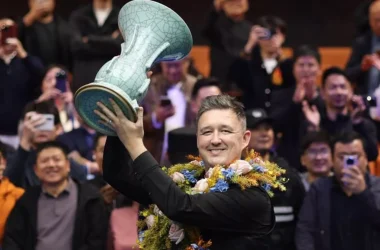
Liang Wenbo and Mark King secured their sole ranking successes at the 2016 English Open and the 2016 Northern Ireland Open respectively.
Marco Fu later took the honours at the Scottish Open while Stuart Bingham lifted the first Welsh Open trophy under the Home Nations banner.
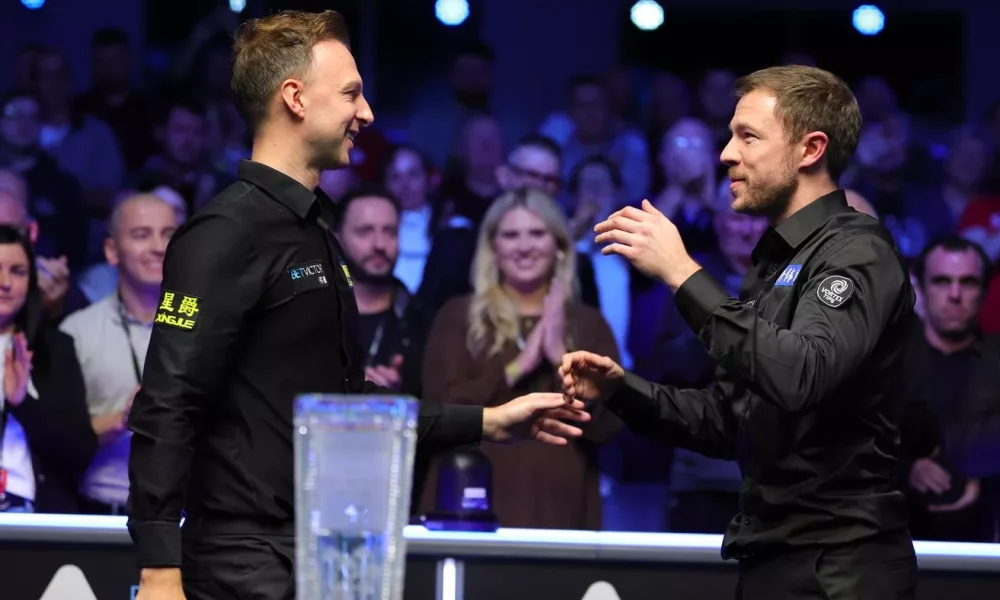
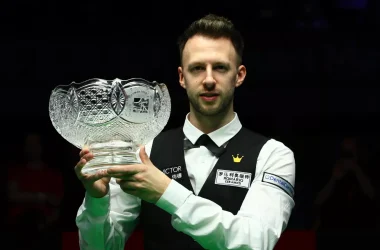
The most dominant competitor of the Home Nations era so far has been Judd Trump, who has won six titles across the series.
Mark Selby follows with five, while Mark Allen and Neil Robertson have each collected four, meaning just four players have accounted for almost half of the total Home Nations crowns.
A total of 23 different players have won at least one Home Nations event during the last decade.
For Selby, Robertson, and Allen, the trio have claimed three out of the four titles – needing just one more of the trophies to complete the career set.
The £1 million prize may be long gone, but the possibility of completing the four-event set therefore remains an interesting little subplot.
The series has also produced its fair share of drama in the final stages.
Ten Home Nations finals have gone all the way to a deciding frame, while another ten have finished 9-7. (Click here: every Home Nations Series final result)
Remarkably, all four finals during the 2018/19 season ended 9-7, while two of the four finals last season were also settled in the final frame.
There have been plenty of special story lines, including Jack Lisowski ending his ranking event hoodoo in last year’s Northern Ireland Open and maiden victories for Jordan Brown and Lei Peifan at the 2021 Welsh Open and 2024 Scottish Open respectively.
Gary Wilson’s three ranking titles have all come in Home Nations events, winning back-to-back Scottish Open titles in addition to the Welsh Open crown.
The individual prize funds have never been particularly spectacular by modern snooker standards, with £100,000 currently going to the winner of each event.
The tournaments have nevertheless generally attracted good attendances and have become events that most leading players are keen to win, which is arguably a better measure of the success of the original idea than the size of the winner’s cheque.
The Home Nations concept has evolved in other ways too.
The original £1 million challenge was eventually abandoned, but since the 2024/25 campaign there has been a £150,000 bonus for the player who performs most consistently across the four tournaments.
Robertson won the first prize before Lisowski claimed the jackpot during the 2025/26 season.
The original idea was ultimately about putting professional snooker in front of audiences around England, Northern Ireland, Scotland, and Wales.
A decade later, the four tournaments remain established parts of the calendar, with their own identities and increasingly lengthy histories.
Next up for the 2026/27 season will be the Northern Ireland Open, which returns to the Waterfront Hall in Belfast from October 18 to 25.
Featured photo credit: WST


Despite their relatively lower prestige, I have greatly enjoyed the Home Nations events, but from a travelling fan’s point of view, they are not as good as they used to be.
The initial concept was for a flat-draw, 128-player event in 7 days, with many tables (5-8, depending on the venue). This gave it the feel of a traditional tournament: each player arrives on Monday (or Tuesday) with a cue, and by Sunday night it’s down to two players fighting for the trophy. You get to see the whole narrative – 128 individual journeys – unfold before your eyes, played out under one roof. You’d be able to see every player on tour.
That’s been broken now, ‘by demand’. The gradual introduction of ‘qualifiers’ from 2021, and then the tiered draws in 2024 meant that the events are no longer compact and cohesive, but are more geared to showcasing elite players, like everything else. Unfortunately that means we start to notice more the inadequacy of the venues, and the crazy roll-on scheduling that means some matches start as late as 10:45pm. The much-trumpeted best-of-11 quarter-finals was an attempt to deflect from the fact that all the ‘qualifiers’ were now played behind closed doors: it’s no longer possible to watch all the players.
Nevertheless, they are still enjoyable events to follow, and most of the best players still turn up. I always go to the English Open, but not the others anymore.
It would be the my highlight to my twilight to be able to join you Lewis in Brentwood at the English Open.
Be happy to meet up with you! I live in Stratford, East London, so it’s an easy trip for me.
This great! Thank you sir.
It’s been covered on a number of podcasts but we shouldn’t forget this month has seen the twentieth anniversary of the late great Paul Hunter’s passing. Dave Hendon delivered a beautiful tribute to him in a standalone episode of the Snooker Scene Podcast. Those Masters final victories define his legacy, but the Leeds man also lifted a trio of ranking titles,from five finals, compiled 114 career centuries, with a high of 146, and reached a Crucible semi-final. Aged just 17, reached the semis of the Welsh Open and the final eight at the UK Championship.
The first two winners now banned for match-fixing and Liang Wenbo disgraced for his brutal attack on a woman in Sheffield.
The Northern Ireland Open has proved to be an excellent addition to the calendar. It’s Waterfront Hall venue is in the running as one of the tour’s best venues. The event has been particularly blessed with a collection of great finals.
This series has arguably breathed new life into the Welsh Open. It’s position as the series’ denouement lends it added cachet with the Bet Victor Bonus often being decided there.
The English and Scottish Opens have struggled in comparison. Their struggles for a suitable venue has played a part. While the Scottish Opens has often suffered from it’s proximity to the UK Championship.
I’d favour a 128 flat draw for these events again, as the balance isn’t quite right currently. The only downside was too many matches became lost amongst the congested schedule. Ideally, nine days would allow the event to breathe a little more if they revert to having 128 players at the venue.
My Top Five Favourite Home Nations Moments:
1. Jack Lisowski winning the Northern Ireland Open just months after his dad passed. The speeches afterwards provided additional power to an already glorious moment for Jackpot.
2. A peak performance from Ronnie O’Sullivan in the 2017 English Open final, against Kyren Wilson. A 98% pot success rate in a 9-2 victory.
3. Mark Allen defeating John Higgins 9-8 in the 2021 Northern Ireland Open final. One of the greatest atmospheres I’ve heard at a snooker match.
4. Joe Perry winning the 2022 Welsh Open. It was a delight to see Joe win a trophy where he could actually have his family present and receive an actual piece of silverware as opposed to when he won his only other ranking title in Thailand.
5. Rob Milkins lifting the 2023 Welsh Open and the Bet Victor Bonus. A win that seemed to be immensely popular across the snooker community.